Tel: 01242 525616 | Email: admin@hestersway.gloucs.sch.uk
Let's connect.
Our School
Admissions at HWPS
HWPS Our School Day
Values, Mission, Vision
Staff and their roles
Governors
School Uniform
School Meals
Starting in Reception Class
School Gallery
Whole School Events
Cultural Capital Offer
Community Links
Vacancies
Curriculum
Curriculum Subjects
Curriculum Design
EYFS
English
Maths
Science
Art & Design
Computing
Design & Technology
Geography
History
Modern Foreign Languages
Music
Religious Education
Recovery Curriculum
SEND
Primary National Curriculum
KS 1 & 2 Framework
Personal Development
British Values
PSHE Education Programme of Study (Key stage 1-5)
Programme builders long term plan and MTP QUESTION based model WITH thrive
Promoting Fundamental British Values Statement
PSHE Policy
SRE Policy
Physical Education
Forest School
Forest School Overview
Hester’s Way Forest School
Statutory Information
Financial Benchmarking
Ofsted 2021 Report
Pupil Premium PP
Pupil Premium Strategy 2023-24
Pupil Premium Strategy 2022-23
Pupil Premium Strategy 2021-22
Pupil Premium Strategy 2020-21
Pupil Premium Strategy 2019-20
Pupil Premium Strategy 2018-19
Sports Premium
Sports Premium 2021-22
Sports Premium 2020-21
Sports Premium 2019-20
Sports Premium 2018-19
Catch Up Funding
Covid Catch-Up Premium Plan – HWPS
School Performance Information
School Performance 2023-24
Compare School Service
Policies
Safeguarding
Safeguarding Policies
Safeguarding Training Page
Parent Area
Home Learning
Newsletter
Parent/Carer Questionnaire Feedback
Contact Us
Alumni
Donations
Our School
Admissions at HWPS
HWPS Our School Day
Values, Mission, Vision
Staff and their roles
Governors
School Uniform
School Meals
Starting in Reception Class
School Gallery
Whole School Events
Cultural Capital Offer
Community Links
Vacancies
Curriculum
Curriculum Subjects
Curriculum Design
EYFS
English
Maths
Science
Art & Design
Computing
Design & Technology
Geography
History
Modern Foreign Languages
Music
Religious Education
Recovery Curriculum
SEND
Primary National Curriculum
KS 1 & 2 Framework
Personal Development
British Values
PSHE Education Programme of Study (Key stage 1-5)
Programme builders long term plan and MTP QUESTION based model WITH thrive
Promoting Fundamental British Values Statement
PSHE Policy
SRE Policy
Physical Education
Forest School
Forest School Overview
Hester’s Way Forest School
Statutory Information
Financial Benchmarking
Ofsted 2021 Report
Pupil Premium PP
Pupil Premium Strategy 2023-24
Pupil Premium Strategy 2022-23
Pupil Premium Strategy 2021-22
Pupil Premium Strategy 2020-21
Pupil Premium Strategy 2019-20
Pupil Premium Strategy 2018-19
Sports Premium
Sports Premium 2021-22
Sports Premium 2020-21
Sports Premium 2019-20
Sports Premium 2018-19
Catch Up Funding
Covid Catch-Up Premium Plan – HWPS
School Performance Information
School Performance 2023-24
Compare School Service
Policies
Safeguarding
Safeguarding Policies
Safeguarding Training Page
Parent Area
Home Learning
Newsletter
Parent/Carer Questionnaire Feedback
Contact Us
Alumni
Donations
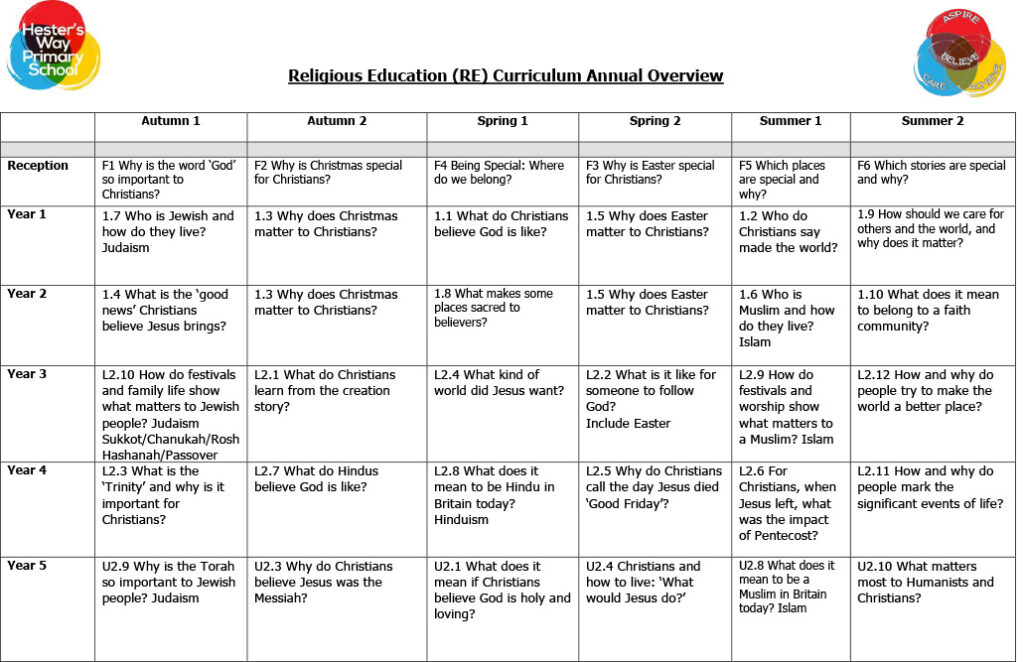
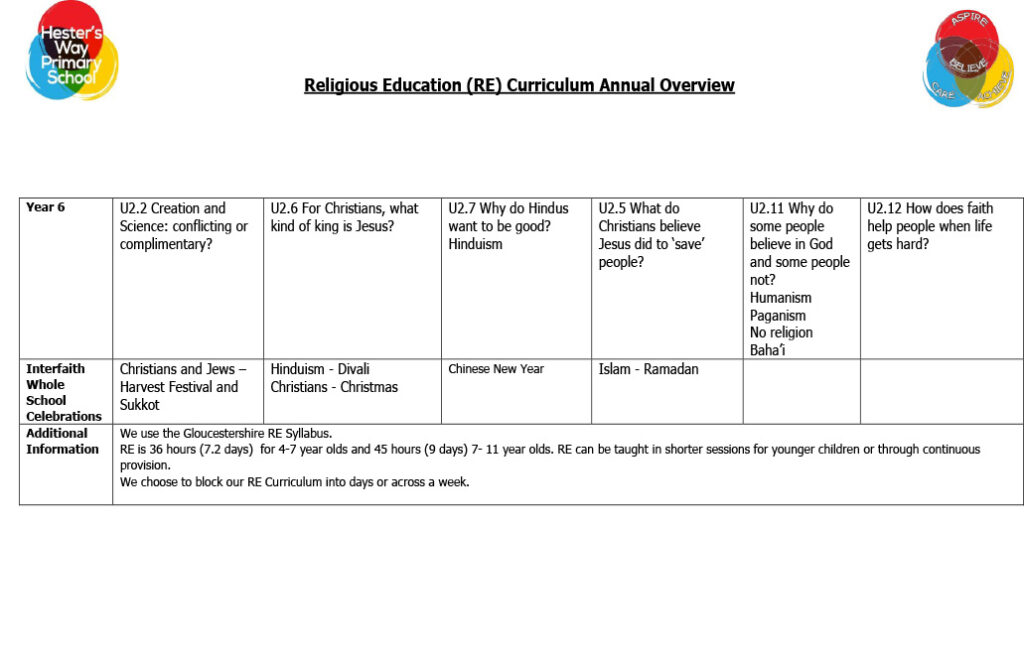
Religious Education Syllabus